Jigsaw Puzzles - HD Adventure
- 4.8
- Rating
- 500.00K
- Installs
- Free
- Price

 Analysis by App-foxy
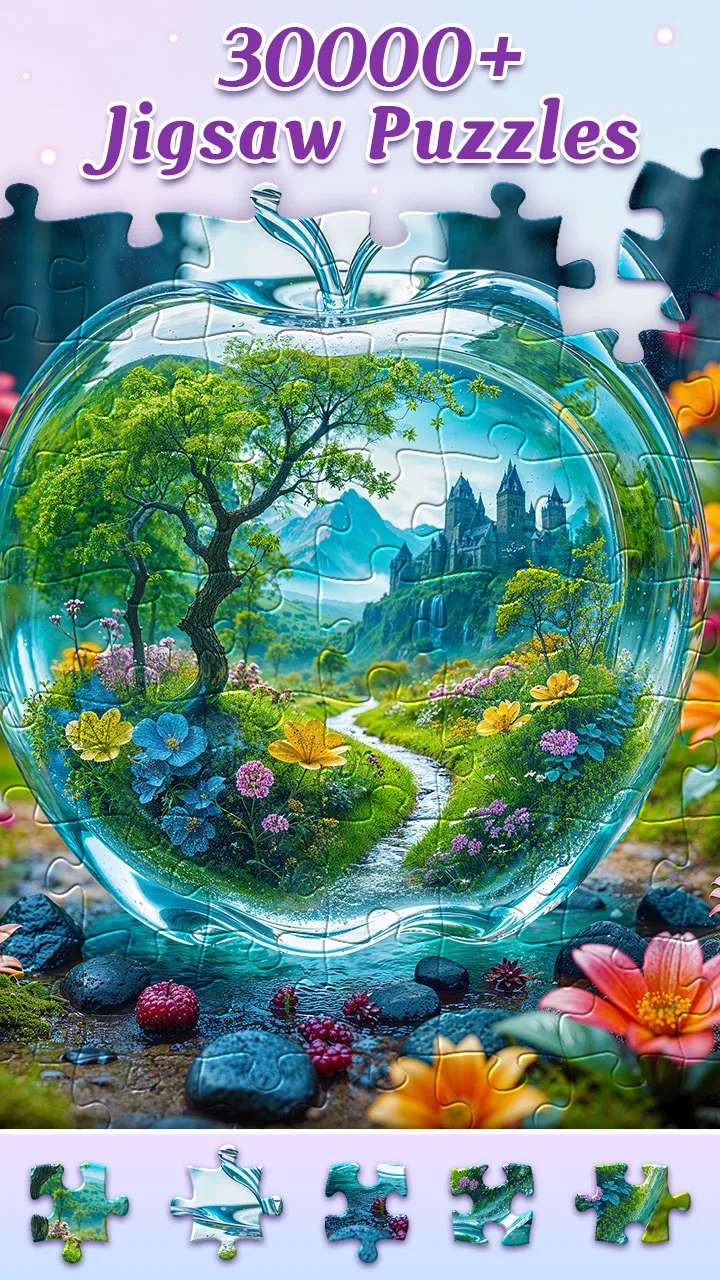
I spent time with Jigsaw Puzzles - HD Adventure as a casual trivia-style game built around assembling pictures rather than answering traditional questions. Its appeal is easy to understand: it turns a familiar jigsaw activity into a portable game, with a magical theme suggested by its store summary and a format that suits short, quiet sessions. I found it most enjoyable when I wanted something calmer than a competitive quiz or a reflex-heavy mobile game.
Greyfun Games presents it as a free game for everyone, and that broad age rating matches the gentle nature of the concept. It has reached over 100 thousand installs and holds a 4.8 average from around 4.9 thousand ratings, which suggests that the basic puzzle loop has connected with a sizeable audience. The game was released on March 19, 2025, and version 1.2.3 is the version to look for when checking compatibility.
How the puzzle experience feels in everyday use
I find the everyday appeal here less about chasing a score and more about settling into a visual task at my own pace. That makes the experience easy to fit into a quiet pause, though the screen and touch controls shape how comfortable each session feels. The next section looks at the small habits that make solving feel smoother.
You May Also Like

 Blood Strike: 2.5 Anniversary
Blood Strike’s Loadouts Turn Every Drop Into a Tactical Gamble
A close look at Blood Strike’s custom loadouts: how fast access to signature weapons reshapes its battle royale rhythm, rewards preparation, and narrows the gap between fights.

 Pandora - Music & Podcasts
Pandora’s Music Is Easy to Start, but Harder to Recover
Pandora’s strength is its low-effort path from a seed to a station. Its weak spot is how much confidence it asks you to place in connection, setup, and quiet recovery.

 8 Ball Pool
 Is Built on Rivalries, Rematches, and Routine
A close look at the rivalries, rematches, shared routines, and unanswered safety questions that turn a quick pool match into a persistent mobile community.

 Samsung Music
’s Quiet Strength Is Playing What You Already Own
Its reach comes less from spectacle than from dependable access to a personal library. That simplicity is both the app’s strongest retention engine and its ceiling.

 AccuWeather: Weather Radar
AccuWeather Review: A Quick, Clear Forecast for Everyday Decisions
For everyday plans, the best forecast is the one you can understand quickly. AccuWeather makes rain timing, radar, and local conditions easy to act on, with a few trade-offs.

 Hill Climb Racing
Why Hill Climb Racing Still Turns Crashes Into One More Run
A tiny car, a bumpy hill and one more upgrade: Hill Climb Racing keeps resurfacing because its simple chaos makes every near-miss feel personal.
More From Our News Desk
View All News


Readability and navigation come first
The central strength of a jigsaw game is that the objective is immediately understandable. I do not need to learn a complicated rule set before starting: I look at the image, identify edges and colors, and gradually turn scattered pieces into a complete picture. That makes this a comfortable choice for someone who finds conventional trivia games stressful or who simply wants a more visual kind of challenge.
The “HD” presentation is important to the experience because jigsaw solving depends on seeing small differences between neighboring pieces. In practice, I would approach each puzzle by separating obvious border pieces first, then grouping pieces by color, texture, or recognizable objects. This is more effective than dragging pieces randomly, especially on a phone where the playing area is limited.
One useful habit is to pause before moving anything and scan the whole board. I found that taking a few seconds to locate corners and strong color clusters reduces unnecessary movement. It also makes the game easier to follow if I am playing in a bright room, on a smaller screen, or while sharing attention with something else.
The magical framing gives the collection a more inviting identity than a plain digital puzzle shelf. Still, the real test is whether the images remain comfortable to inspect over time. Players who enjoy visual sorting and gradual progress will probably settle into the rhythm quickly. Those who want constant surprises, story choices, or quiz questions may find the experience too focused on one activity.
A good fit for patient players, not speed seekers
I would recommend this game first to people who enjoy quiet concentration. It works well as a short break between tasks, a low-pressure evening activity, or something to do while listening to an audiobook or familiar television program. Because the puzzle itself supplies the challenge, I do not have to compete against another player or worry about a timer in order to feel involved.
A realistic use case is a commute or waiting-room visit. I can open a puzzle, work on a few recognizable sections, and stop without losing the feeling that I made progress. That makes it less demanding than a game that requires a full uninterrupted round. It is also a reasonable option for families who want an uncomplicated visual activity suitable for an Everyone-rated audience, although younger players may still need help with small pieces or the touch controls.
There is a trade-off here. The same calm structure that makes the game approachable can feel repetitive to someone who needs changing mechanics. If I am looking for wordplay, general-knowledge questions, timed rounds, or a strong competitive ladder, a conventional trivia app will be a better match. If I want a digital puzzle that rewards observation rather than speed, this is the more natural choice.
Touch interaction and motor comfort
Jigsaw play on a touchscreen is inherently more demanding than handling physical pieces. I need to press, drag, and release accurately, and small pieces can make that process tiring for players with limited dexterity, tremors, joint pain, or difficulty maintaining a steady touch. I would not describe the format as automatically accessible simply because the rules are simple.
My practical advice is to play with the phone supported on a table rather than holding it in one hand. That reduces wobble and leaves the other hand free for controlled dragging. Short sessions are also more comfortable than trying to complete a large puzzle in one sitting. If a piece repeatedly lands in the wrong place, I would slow down and move it from a less crowded area of the board instead of fighting through a pile of overlapping pieces.
Players with reduced fine-motor control should think about screen size before choosing this game. A tablet can offer more room for separating pieces and inspecting details, while a compact phone may make the same puzzle feel cramped. The minimum operating-system requirement is Android 7.1, so older compatible devices may still run it, but the physical size and responsiveness of the device will matter just as much as software compatibility.
There is also a cognitive benefit to the visual structure. I can create my own method: corners first, then borders, then distinctive objects, followed by similar shades. That predictable workflow can be easier to manage than a game that constantly changes instructions. On the other hand, players who have difficulty tracking many loose objects may prefer a simpler puzzle arrangement or a physical jigsaw with larger pieces.
Visual and sensory considerations
Jigsaw puzzles depend heavily on visual contrast, color recognition, and the ability to distinguish shapes. That means the game may be comfortable for some players with visual limitations but frustrating for others, depending on the image and the size of the pieces. Dark scenes, subtle gradients, or repeated textures can make progress harder than a picture with clear outlines and strong color blocks.
I would approach each board by looking for high-contrast landmarks rather than trying to inspect every piece equally. A bright object, a sharp edge, or a distinctive pattern can serve as an anchor. This is a useful strategy for anyone who becomes visually tired: solve the clearest areas first, then decide whether the remaining sections are worth continuing.
For players sensitive to visual clutter, a scattered board may become tiring even when the puzzle is not technically difficult. Taking regular breaks helps, particularly during longer sessions. Lowering the screen brightness to a comfortable level and avoiding glare can make a bigger difference than expected. These are general device adjustments rather than special game functions, but they affect how accessible the experience feels in real life.
Sound is not central to the reason I would choose this title. The puzzle can be approached primarily through sight and touch, which is useful for quiet environments such as public transport, a library, or a shared bedroom. At the same time, anyone who relies on audio guidance should be cautious about choosing a game whose core activity is visual piece recognition. It is not a substitute for an audio-first game or a screen-reader-oriented experience.
Playing in different situations
The free entry point makes it easy to try without committing money immediately, but the game includes in-app purchases ranging from $6.99 to $69.99 per item. That range is worth considering before handing the device to a child or using the game as a family activity. I would check purchase controls on the device first, especially when several people share one account.
The paid options may also affect how I judge the free experience. A player who wants a large, continuously expanding collection may eventually need to decide whether the available content and the purchase structure fit their budget. Someone who only wants occasional puzzles can approach it more casually and stop whenever the free selection no longer feels sufficient. I would not treat the presence of purchases as a reason to reject the game outright, but I would make the spending boundary clear in advance.
For travel, the important question is not only whether the game is relaxing but whether it suits the conditions around me. On a moving bus, precise dragging can be harder because the device is constantly shifting. In a quiet room, the slow visual pace is an advantage. In a crowded or rushed setting, I would choose a simpler activity that does not require careful piece placement.
The game is also suitable for shared problem-solving, even if the touch controls mean that only one person may be moving pieces at a time. Two people can discuss where a border belongs, identify matching colors, and take turns arranging the board. That makes it more social than playing alone might suggest, but it is still a cooperative conversation around one screen rather than a dedicated multiplayer contest.
Where the experience still creates barriers
The biggest barrier is the mismatch between a simple goal and potentially delicate interaction. Knowing where a piece belongs does not guarantee that I can place it comfortably. A player may understand the puzzle perfectly yet struggle with tiny targets, accidental drags, or a crowded board. This is the point where a physical puzzle with larger pieces, a tablet, or a different digital format could be more practical.
Another limitation is the narrowness of the main activity. The store short description identifies it simply as jigsaw puzzles, and that is an accurate expectation: I would not install it hoping for a broad trivia system with factual questions and varied mini-games. The category label may attract people who enjoy brain games generally, but the actual appeal is visual assembly. That distinction matters when deciding whether it belongs on a device used by a mixed group of players.
Players who need very explicit customization should test the game personally before settling on it as their main puzzle tool. Comfort can vary with eyesight, motor control, device size, and tolerance for visual detail. I would also avoid assuming that an Everyone rating means every person will find the interaction easy. Age suitability and physical accessibility are different questions.
There is a similar issue for people who prefer measurable progression. A traditional trivia game can show correct answers, streaks, categories, and scores. A jigsaw game gives me a more personal sense of completion, but that may feel less motivating if I want constant performance feedback. In that situation, a quiz app or a puzzle platform with broader challenge tracking would probably provide a stronger reason to return.
How it compares with familiar alternatives
Against physical jigsaws, the obvious advantage is convenience. I do not need a table, a box, or a safe place to leave unfinished pieces. I can pick up the device and continue during a spare moment. The disadvantage is equally clear: touchscreen pieces do not provide the same tactile feedback, and precise dragging can be less satisfying or less manageable than moving cardboard pieces.
Compared with standard trivia games, this title is slower and more visual. I can play without recalling facts, racing a clock, or worrying about an incorrect answer. That makes it friendlier for relaxation and for players who prefer pattern recognition. A trivia app remains the better option for learning facts, testing memory, or competing through scores.
Compared with other digital jigsaw games, the magical presentation is the main identity I notice from the product positioning. The choice is less about mastering a complex ruleset and more about whether the artwork, pace, and touch interaction suit me. I would choose this one for a gentle puzzle mood, while I would look elsewhere if I needed robust accessibility controls, a strong social layer, or a very competitive progression system.
What I would check before installing
I would first confirm that the device runs Android 7.1 or later and that its screen is comfortable for inspecting small visual details. The current version is 1.2.3, so checking the device’s available update path is sensible before starting. Compatibility is only the first step; a technically supported phone can still be unpleasant if it has a cramped display or an unreliable touch surface.
Next, I would decide what kind of player I am. If I want a peaceful visual pastime, the free download is an easy experiment. If I expect a deep trivia catalogue, rapid-fire questions, or competitive multiplayer, I would choose another category instead. This simple expectation check prevents the most common disappointment: mistaking a jigsaw-focused game for a general quiz title.
Finally, I would set a purchase boundary before playing. The price range for individual in-app items goes from $6.99 up to $69.99, which is significant enough to treat purchases as a deliberate decision rather than an accidental extension of a free session. For a child, a shared family device, or anyone managing a strict budget, purchase protections are part of responsible setup.
My inclusive verdict
I see Jigsaw Puzzles - HD Adventure as a pleasant option for players who want a calm, image-led challenge that can fit around everyday life. Its Everyone rating, free starting point, and straightforward jigsaw concept make it approachable in principle, while the magical theme gives the experience more character than a bare puzzle board. Greyfun Games has chosen a format that does not demand fast reactions or specialist knowledge.
Its accessibility is more conditional than the simple rules might suggest. The game is easiest for people who can comfortably distinguish visual details and perform controlled touch gestures. A larger screen, stable playing surface, sensible breaks, and a methodical sorting strategy can improve the experience considerably. Those practical adjustments are especially valuable for players who tire easily or find crowded screens difficult.
I would recommend trying it when the goal is relaxation, visual concentration, or a portable alternative to a physical jigsaw. I would skip it if I needed audio-led interaction, extensive control customization, factual trivia, or a highly competitive structure. The in-app purchase range also means I would approach the free version first and make any later spending intentional.
Overall, this is a focused game rather than an all-purpose brain-training package. That focus is its best quality: when I want to quietly assemble an image, it gives me a clear activity without unnecessary pressure. The right reason to choose it is not speed or competition, but comfortable, patient puzzle solving on my own terms.
FAQs for Jigsaw Puzzles - HD Adventure
01What is Jigsaw Puzzles - HD Adventure and how does it work?
Jigsaw Puzzles - HD Adventure is a puzzle game app available on Android and iOS that offers a wide variety of high-definition jigsaw puzzles. The app provides an immersive experience with stunning graphics and a user-friendly interface. Users can select puzzles of varying difficulty levels, adjust the number of pieces, and enjoy a seamless gameplay experience with intuitive touch controls.
02Are there any in-app purchases or ads in Jigsaw Puzzles - HD Adventure?
Yes, Jigsaw Puzzles - HD Adventure includes in-app purchases and ads. While the app is free to download, users can purchase additional puzzle packs or remove ads for a premium experience. The ads are typically non-intrusive, but purchasing the ad-free version can enhance the overall gameplay by offering uninterrupted puzzle-solving.
03Can I play Jigsaw Puzzles - HD Adventure offline?
Yes, Jigsaw Puzzles - HD Adventure can be played offline. Once you download the desired puzzles while connected to the internet, you can enjoy solving them without needing an active internet connection. This feature is especially handy for users who wish to play during travel or in areas with limited connectivity.
04Does Jigsaw Puzzles - HD Adventure offer any customization options?
The app offers various customization options to enhance your puzzle-solving experience. Users can choose the number of pieces, enabling them to adjust the difficulty level according to their preference. Additionally, you can select different backgrounds to create a more personalized environment, making the gameplay more enjoyable and tailored to individual tastes.
05Is Jigsaw Puzzles - HD Adventure suitable for all ages?
Yes, Jigsaw Puzzles - HD Adventure is designed to be suitable for users of all ages. The app features a wide range of puzzle difficulties, from easy to challenging, making it accessible for children, adults, and seniors alike. The intuitive interface and engaging visuals ensure that users of varying skill levels can enjoy the game.
Pros
- Stunning HD graphics enhance puzzle experience.
- Wide variety of themes and categories available.
- Offline play allows for puzzles anytime
- anywhere.
- Regular updates with new puzzles keep it fresh.
- User-friendly interface makes navigation simple.
Cons
- In-app purchases can become costly over time.
- Occasional ads interrupt the gameplay.
- Limited free puzzles without subscription.
- Large app size may affect storage space.
- Some puzzles are too easy for advanced users.

Jigsaw Puzzles - HD Adventure
Gallery